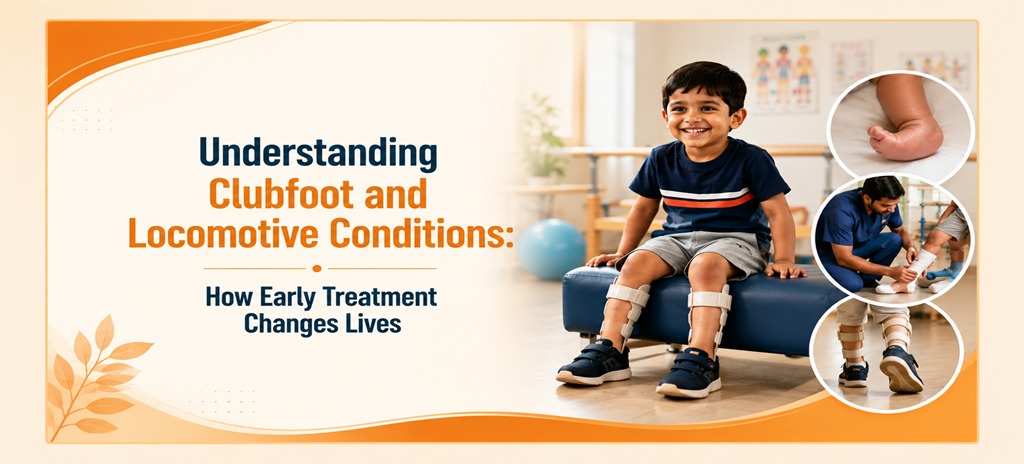


Living with a physical disability can present significant daily challenges, but for thousands of children and individuals born with or developing orthopedic conditions, early medical intervention offers a clear path toward mobility, dignity, and independence. Among the most common physical impairments affecting children worldwide are clubfoot (talipes equinovarus) and various locomotive disabilities affecting the musculoskeletal system.
Without timely medical care, these conditions can severely limit a child’s ability to walk, attend school, or lead an active life, often trapping families in cycles of hardship and social isolation.
At Narayan Seva Sansthan UK, we believe that physical limitations should never define a person’s future or dictate their potential. By focusing on specialized corrective surgeries, non-surgical corrective procedures, and comprehensive physiotherapy, our mission is to make life-changing treatments accessible to underprivileged individuals. Through the generous support of UK donors, we bridge the gap between debilitating physical conditions and life-altering medical care, empowering children to take their very first steps toward a brighter tomorrow.
What Are Clubfoot and Locomotive Conditions?
1. Understanding Clubfoot (Talipes)
Clubfoot is a congenital condition where a baby is born with one or both feet twisted inward and downward. The tendons connecting the leg muscles to the heel bones are unusually short and tight, forcing the foot into an unnatural position. While clubfoot is completely treatable when caught early, untreated cases lead to chronic pain, difficulty walking on the ankles or sides of the feet, and severe long-term disability.
2. Understanding Locomotive Conditions
Locomotive conditions encompass a broad spectrum of impairments that affect an individual’s ability to move, walk, or perform physical activities independently. These can stem from:
-
Polio or Post-Polio Sequelae: Muscle weakness or paralysis resulting from childhood infection.
-
Cerebral Palsy: Neurological conditions impacting posture, balance, and muscle coordination.
-
Congenital Limb Deformities: Structural bone or joint abnormalities present from birth.
-
Traumatic Injury or Disease: Orthopedic impairments resulting from accidents or untreated bone infections.
The Critical Importance of Early Treatment
The human body—particularly during early childhood—possesses remarkable adaptability. When clubfoot or locomotive deformities are treated during infancy or early childhood, non-surgical techniques such as the Ponseti method (gentle manipulation and serial casting) or minor corrective surgeries yield exceptionally high success rates. Early intervention prevents bone deformities from worsening as a child grows, eliminating the need for complex, invasive surgeries later in life.
Beyond the physical benefits, early treatment opens doors to education, social integration, and emotional well-being. A child who gains the ability to walk unassisted can attend school alongside peers, participate in sports, and build self-confidence. Early care transforms not just a physical condition but an entire life trajectory—turning dependency into self-reliance.
How Narayan Seva Sansthan UK Makes a Difference
Providing free corrective surgeries, customized orthopedic braces, mobility aids, and continuous physical rehabilitation requires dedicated resources. Narayan Seva Sansthan UK (Registered Charity No. 1149630) leverages the strength of UK charitable donations to fund these life-altering medical procedures in India, where currency conversion allows every British pound to stretch significantly further.
Through UK Gift Aid, UK taxpayers can boost their donations by 25% at no extra cost, allowing even modest contributions to create a massive impact on a child’s medical treatment path.