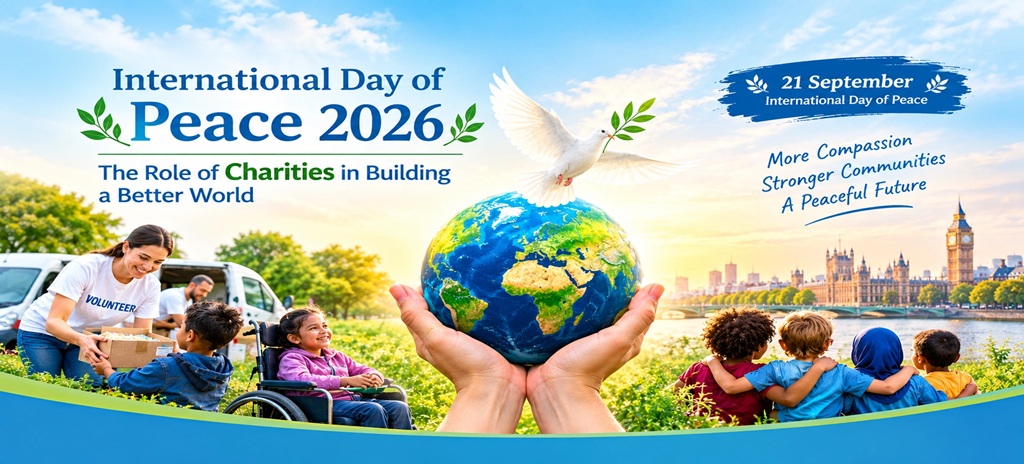


International Day of Peace, observed every year on 21 September, is a global reminder of the importance of peace, compassion, dignity and cooperation. While governments and international organisations play an important role in promoting peace, charities and humanitarian organisations also make a meaningful contribution by supporting communities, protecting vulnerable people and creating opportunities for a better future.
For people across the UK, the day provides an opportunity to reflect on how acts of kindness, volunteering and charitable giving can contribute to stronger and more compassionate communities.
What Is International Day of Peace?
The International Day of Peace was established by the United Nations to promote the ideals of peace and encourage people and nations to work towards reducing conflict and violence. The day highlights the importance of dialogue, understanding, equality and cooperation in creating a peaceful world.
Peace is not simply the absence of conflict. It also involves ensuring that people have access to basic necessities, education, healthcare, dignity and opportunities to participate fully in society. This is where the work of charities and humanitarian organisations becomes particularly important.
The Role of Charities in Promoting Peace
Charities work with individuals and communities facing poverty, disability, inequality, displacement and other challenges. By addressing these underlying issues, charitable organisations can help create conditions in which people and communities are better able to thrive.
A charity can contribute to peace by providing practical support, encouraging inclusion and helping people overcome barriers that may otherwise limit their opportunities.
From providing food and essential supplies to supporting education and healthcare initiatives, charities often work directly with communities to improve quality of life. These efforts demonstrate that peace can also be built through everyday acts of service and compassion.
How Humanitarian Work Supports Vulnerable Communities
Humanitarian work focuses on supporting people affected by poverty, disasters, conflict, displacement and other difficult circumstances. Humanitarian organisations may provide food, shelter, medical assistance, education and other essential services to people who need support.
However, humanitarian work is not limited to emergency relief. Long-term programs that improve access to education, healthcare, vocational training and assistive equipment can also help individuals become more independent and resilient.
For people living with disabilities, access to appropriate support can make a significant difference. Providing mobility aids, education, skills training and opportunities for employment can help people participate more fully in their communities.
Why Disability Inclusion Matters for Peace
A peaceful and inclusive society is one in which everyone has the opportunity to live with dignity, regardless of their circumstances.
People with disabilities can face barriers to education, employment, mobility and social participation. Addressing these barriers is an important part of creating more equal communities.
Charities supporting people with disabilities can help by providing assistive devices, education, vocational training, healthcare and rehabilitation services. Such initiatives do more than meet immediate needs—they can help individuals build confidence, independence and a stronger connection with their communities.
Disability inclusion should therefore be seen as an important part of broader humanitarian and social development efforts.
How People in the UK Can Support Charitable Causes
International Day of Peace is an opportunity for people in the UK to consider how they can contribute to positive change. Supporting a charity does not always require a large financial contribution. There are many ways to make a difference.
People can:
- Donate to a trusted charity supporting vulnerable communities.
- Volunteer their time and professional skills.
- Raise awareness about humanitarian and social causes.
- Organise fundraising activities within their local community.
- Support disability inclusion and accessibility initiatives.
- Encourage friends, family and colleagues to participate in charitable activities.
Even small contributions can become meaningful when communities come together with a shared commitment to helping others.
The Importance of Compassion and Seva
The principle of seva, or selfless service, reflects the belief that helping others is a meaningful responsibility. Acts of service can bring communities together and encourage empathy, generosity and mutual respect.
For charitable organisations, this spirit can translate into practical programmes that address real challenges faced by vulnerable people. Whether it is supporting a person with a disability, providing access to education or helping families in need, every act of service can contribute to a more inclusive society.
Building a Better World Through Collective Action
Creating a peaceful world requires more than observing one day each year. It requires continued action from individuals, communities, charities, businesses and institutions.
Charities can help connect people who want to make a difference with communities that need support. Through humanitarian work, social programmes and community initiatives, they can address inequality and help people access the resources and opportunities they need.
For individuals in the UK, supporting reputable charitable organisations is one practical way to turn the values of International Day of Peace into action.
International Day of Peace 2026: A Call to Compassion
International Day of Peace 2026 is an opportunity to look beyond differences and recognise our shared responsibility towards humanity. Peace begins with respect, compassion and a willingness to support people who may be facing difficult circumstances.
By supporting charity and humanitarian work, volunteering and promoting inclusion, people across the UK can contribute to positive change both locally and internationally.
A better world is built through collective effort. Every donation, every hour of volunteering and every act of kindness can help create communities where people are treated with dignity and given the opportunity to build a brighter future.