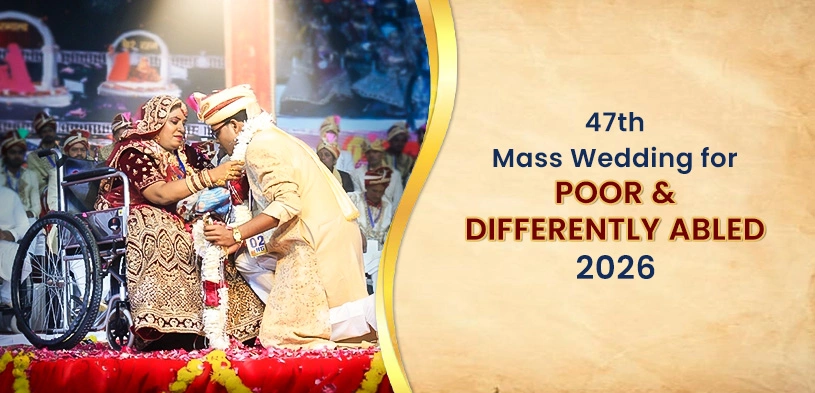


When families attend a wedding function, they also wonder and expect the same thing and feel nerves, joy, and a bit of chaos. Except this wedding is not just theirs. It’s shared with many other couples on the same day, in the same courtyard, in front of the same fire. That’s the reality of the Mass wedding programme organized by Narayan Seva Sansthan, and this coming September marks the 47th time the organization has held it- a tradition the charity has been running long before “sustainability” or “impact” became buzzwords in the charity sector, bringing together a new group of couples each time under the same roof.
The mass wedding dates are fixed 19-20 September 2026, held at NSS’s own campus, Seva Mahatrit, in Udaipur, Rajasthan. It’s worth pausing to consider why an event like this needs to exist at all. In India, getting married is not simply a success. For many families, it’s tied to social standing, and for families dealing with poverty or disability, a wedding can become financially or socially out of reach entirely. Narayan Seva Sansthan built this program specifically to close that gap, for one couple or, in this case, many couples at the same time.
Why are Weddings Important?
In India, a wedding is not just a ceremony – it’s something families plan for years in advance. None of its options. The rituals, the wedding dresses, the jewelry, the food for guests, the priests, and the household gift items- none of it is optional. It’s what’s expected, and that’s exactly what makes it expensive. Even families with steady incomes often dip into years of savings just to meet that expectation. Now, just wonder, what is the same cost for a family living below the poverty line or raising a differently abled child?
Then the family gets nothing in hand for the wedding. They can’t bear the expenses of a wedding. So the wedding just got delayed.
This is where organization in a mass wedding makes the difference. Nothing about the tradition changes – the mandap is still set, and the rituals are still followed. The phere still happens around the sacred fire.
What changes is who pays for it. Narayan Seva Sansthan covers all costs. This way, these families have the same wedding as others. They enjoy equal dignity and the same rituals.
What Happened During the Two-Day Celebration?
Many believe that when couples marry together, it’s just a simpler take on a traditional wedding. But that’s not true. Every ritual and tradition of a traditional Hindu wedding is performed here in its entirety.
The wedding ceremony begins with pre-ceremonies like Ganpati sthapana, followed by haldi and mehndi rituals, where the couple worship Lord Ganesha to bless them and protect them from the evil eye, ensuring the wedding proceeds without obstacles.
- On haldi rasm, haldi will be applied to the couple’s hands.
- The same also happens with the mehndi ritual, where henna is applied to the couple’s hands, and it is believed that old rituals bring good fortune.
- As evening sets in, there’s sangeet: singing, dancing, and folk music that carries the celebratory mood through the night.
- A band baja led procession called a bindoli follows, winding through the grounds before the grooms make their formal entrance the next day in a barat procession, greeted at the gate of the mandap — the decorated hall where the marriage rites are performed by a ceremony called toran.
- The heart of it all comes down to the pheres: seven rounds taken around a sacred fire, each one a specific promise the couple makes to each other. Loyalty, partnership, shared responsibility — the vows cover it all, and by the time the saat phere is complete, the marriage is considered fully and traditionally locked.
How Does Your Donation Support Specifically Abled and Needy Couples?
When someone donates for a mass wedding, the fund actual go to real and genuine things – not some general fund. This donation will pay for brides and groom’s dresses, makeup, jewelry, the mandap, the priests, food for both families and guests, and household gift items like utensils and furniture the couple will actually need once they are married.
None of these expenses will be taken from the families. The purpose of our initiatives is that a family who is not eligible for expense holding does not need to pay for anything. From the smallest ritual item to the wedding itself.
How will You Support This Iinitiative From the UK?
If you are in the UK and really want to do something good for a needy couple. Its best chance to donate to the mass wedding initiative. Narayan Seva Sansthan UK is registered with the Charity Commission for England and Wales under charity number 1149630, and donations made through it go straight to India to fund the organization’s work, the mass wedding.
One thing worth knowing if you are a UK taxpayer: Gift Aid. Tick the box when you donate, and NSS can claim back the basic rate of tax on what you gave, which works out to an extra 25p for every £1. So £100 from you actually turns into £125 for NSS, and it costs you nothing extra.
Narayan Seva Sansthan Wider Mission
The mass wedding is just one piece of what Narayan Seva Sansthan does. The same organization runs free corrective surgeries for things like clubfoot, provides artificial limbs, and runs programs in rehabilitation and skill training. Different programs, the same idea behind all of them, helping people live with dignity when money should not be the thing standing in the way.
Conclusion – Two Days of September Begin a Life
Come in September, two days in Udaipur will change what dozens of couples’ lives look like going forward. For each of them, this is not just a ceremony. It’s the wedding that a lot of people assumed they would never get.
Behind every couple is a family that has quietly stopped expecting this day to come. Now it’s happening anyway.
If you want to help make that possible, you can donate through Narayan Seva Sansthan UK for one couple’s wedding or NSS work through the rest of the year.