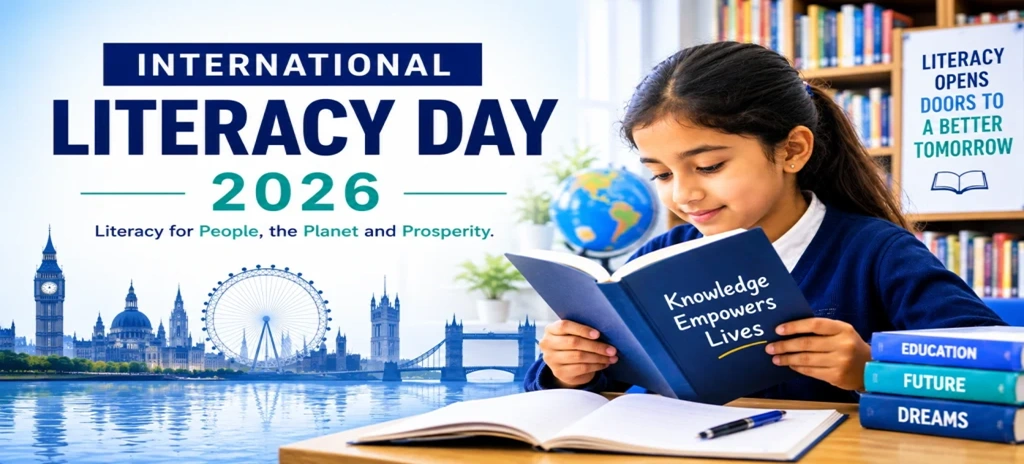


Every year on 8 September, International Literacy Day provides an opportunity to reflect on the importance of literacy and its role in shaping individuals, communities and societies. In today’s world, literacy extends beyond the ability to read and write. It enables people to understand information, communicate effectively, access essential services, pursue education and participate more confidently in economic and social life.
For people in the UK, International Literacy Day 2026 is an opportunity to consider how literacy connects with education, social mobility, employment, digital participation and inclusion. It is also a reminder that access to quality education should not depend on a person’s financial circumstances, background or physical abilities.
What Is International Literacy Day?
International Literacy Day is observed globally on 8 September. UNESCO established the day to highlight the importance of literacy as a fundamental right and as a foundation for lifelong learning and development.
In 2026, International Literacy Day marks its 60th anniversary. The year’s theme is “Literacy for people, the planet and prosperity,” highlighting the wider contribution of literacy to individuals, communities and sustainable development.
The observance encourages governments, educators, charities, communities and individuals to consider how literacy can be strengthened and made accessible to everyone.
Literacy for People, the Planet and Prosperity
Literacy for people, the planet and prosperity means recognising that the ability to read, understand and use information is essential not only for personal opportunity and social inclusion, but also for environmental awareness and sustainable economic progress. When people can access and interpret knowledge about climate, resources, health and livelihoods, they are better equipped to protect the planet, build resilient communities and contribute to shared prosperity for current and future generations.
Why Literacy Still Matters in the UK
The UK has a highly developed education system, but literacy remains an important social issue. Literacy skills influence how people understand written information, communicate with others, navigate services and make informed decisions.
According to the latest OECD Survey of Adult Skills, 18% of adults aged 16–65 in England have low literacy proficiency. While England performs above the OECD average, the findings demonstrate that literacy challenges continue to affect a significant proportion of the population.
Literacy should therefore not be viewed simply as a school-based issue. It can influence opportunities throughout a person’s life, from education and employment to financial decision-making and participation in society.
Literacy as a Foundation for Education
Reading and comprehension provide the foundation for learning across almost every subject. Children who develop strong literacy skills are better equipped to understand educational material, express their ideas and continue learning as they progress through school.
However, educational opportunity can be affected by socioeconomic circumstances. Children from disadvantaged backgrounds may face additional challenges in accessing books, technology, learning resources and supportive educational environments.
Providing children with appropriate educational support can help reduce these barriers and give them greater opportunities to reach their potential.
The Connection Between Literacy and Employment
Literacy is also closely connected to employment and economic participation. Modern workplaces require people to understand instructions, communicate clearly, complete forms, interpret information and increasingly interact with digital systems.
Strong literacy skills can support people as they enter the workforce and develop professionally. They can also make it easier to access training, understand workplace information and pursue new career opportunities.
This makes literacy an important part of discussions around employability, social mobility and economic inclusion.
Digital Literacy in Modern Britain
The meaning of literacy has evolved significantly in the digital age. People now encounter information through websites, online services, social media, digital documents and other technologies.
As a result, being able to read and write is only one part of navigating the modern information environment. People also need to understand digital information, assess its reliability and use online platforms responsibly.
Digital literacy can influence access to employment, education, banking, healthcare, government services and everyday communication. Ensuring that people are not excluded from these opportunities is an increasingly important part of creating an inclusive society.
Literacy and Disability Inclusion
Literacy and education should be accessible to everyone, including people with disabilities. However, learners with disabilities can sometimes encounter barriers related to accessibility, learning resources, communication and the availability of appropriate support.
Inclusive education aims to ensure that children and young people can participate meaningfully in learning regardless of their individual circumstances.
Accessible educational materials, assistive technology, appropriate teaching approaches and supportive environments can help learners with disabilities develop their skills and confidence.
For organisations working with people with disabilities, education can therefore complement healthcare and rehabilitation by helping individuals build knowledge, confidence and greater independence.
Why Education Matters for Disadvantaged Children
For children experiencing poverty or social disadvantage, education can be one of the most powerful pathways towards greater opportunity.
Access to learning materials, nutritious food, qualified teaching, technology and a supportive environment can make a meaningful difference to a child’s educational journey.
Charities can play an important role by helping address some of the practical barriers that disadvantaged children face. Their work can complement formal education systems by providing additional resources and opportunities to children and communities that need them most.
The Role of Charities in Supporting Education
Charitable organisations contribute to education in many different ways. Some provide books and learning materials, while others support schools, scholarships, digital learning, vocational training or educational infrastructure.
Narayan Seva Sansthan has supported underprivileged children through educational initiatives as part of its wider humanitarian work. Its approach recognizes that meaningful social development involves addressing multiple aspects of people’s lives, including education, healthcare, disability support, rehabilitation and livelihood opportunities.
Supporting education can therefore be viewed as a long-term investment in human potential rather than simply an immediate form of assistance.
Literacy Is About More Than Reading and Writing
A modern understanding of literacy also includes the ability to understand, interpret and use information effectively.
Whether someone is reading a medical instruction, applying for employment, understanding financial information or accessing a public service, literacy can influence their ability to make informed decisions.
For this reason, literacy contributes to independence, confidence and participation. These benefits are particularly important for people who may already face barriers because of poverty or social disadvantage.
How People in UK Can Support Literacy
International Literacy Day is an opportunity for individuals and communities to take practical action.
Parents can encourage children to develop positive reading habits. Individuals can donate books or educational resources where appropriate, volunteer with community initiatives, or support organisations working to expand educational opportunities.
Businesses can also contribute through fundraising, volunteering and partnerships with education-focused charities.
For those choosing to make a charitable donation, researching an organization’s mission, programs, and impact can help ensure that their support is directed towards a cause they genuinely value.
Building a More Inclusive Society Through Education
Education has benefits that extend beyond the classroom. When people have access to literacy and learning opportunities, they can develop skills that support employment, independence and participation in their communities.
For children from disadvantaged backgrounds, educational support can help open pathways that might otherwise remain difficult to access. For specially abled, inclusive education can help reduce barriers and create opportunities for greater participation.
This is why literacy should be considered an important part of the wider conversation about equality, inclusion and social opportunity.
International Literacy Day 2026: A Call to Support Learning
International Literacy Day 2026 offers an opportunity to look at literacy from a broader perspective. It is not simply about learning to read and write; it is about giving people the skills and opportunities to understand the world around them and participate in it.
As the UK continues to navigate changes in technology, education and employment, ensuring that people have the literacy and learning skills they need remains essential.
On 8 September 2026, let us recognize the importance of literacy and support initiatives that make education more accessible to children and communities facing disadvantage.