

Consider a world in which a child will make his first independent steps after years of struggle, or a parent will make a comeback to the workplace without fears of limited mobility. It is not only physical healing moments, but it is also identity transformation, self-worth rebuilding, and the ability to open up new possibilities in life that had been considered impossible before. Corrective Surgeries are effective medical procedures. But their impact? That goes beyond.
In a world where the ability to access good healthcare is frequently dependent on money, life-altering programmes offering Free Corrective Surgeries are not merely uncommon; they are groundbreaking. With campaigns led by international charity organisations, thousands of lives have been taken off the burden of disability and into the light of potential.
“It’s not just surgery. It’s a second chance at life.”
Understanding Corrective Surgeries: A Perspective Beyond a Medical Procedure
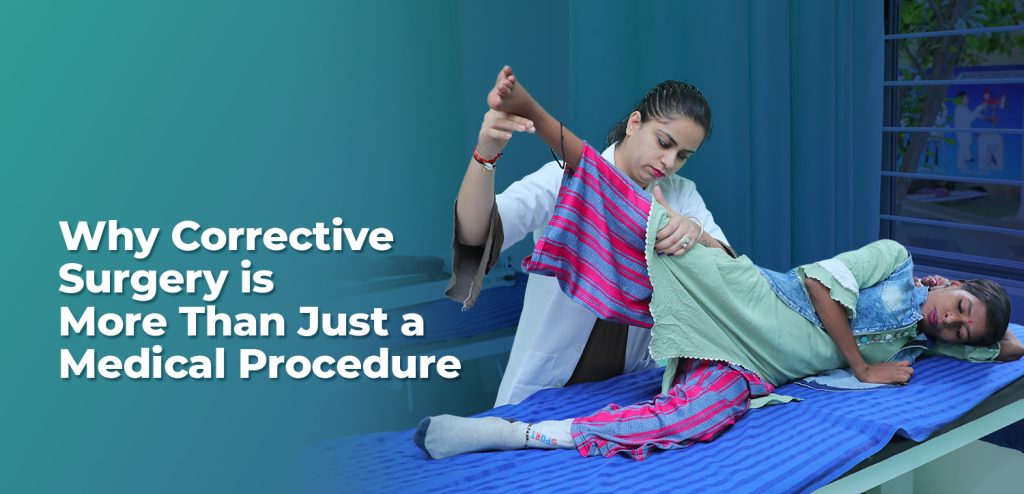
Corrective surgeries refer to specialised operations that aim at correcting a congenital defect, physical disability, or illness induced or brought about by an injury. These can be in the form of limb deformities, complications as a result of polio, or structural abnormalities of movement.
Although the medical objective is to heal the body by repairing physical constraints, the human outcome is much more extensive. To most people, or more so those with disadvantaged backgrounds, such surgeries will be the first step leading to independence and inclusion. They do not constitute cosmetic remedies; they are life-changing solutions.
The effect is multiplied when these procedures are available without cost. It eliminates the fear of money, provides early intervention, and provides the person with hope to live again.
How Corrective Surgeries Transform Lives
Corrective surgeries are usually considered from a strictly clinical perspective: diagnosis, operation, and recovery. But as a matter of fact, they have a highly human and far-reaching effect. These surgeries can be instruments of lifetime change when they are undertaken with the backing of good, organised programmes that provide Free Corrective Surgeries.
1. Regaining Mobility and Physical Independence
At the most obvious level, corrective surgeries help to regain physical functionality. People who are born with certain deformities or with ailments like polio normally have difficulties with simple movements such as walking, standing, or movement of their limbs.
Corrective interventions help in repositioning of bones, strengthening of muscles as well as correcting faulty structures which enables the individuals to move freely. This mobility reduces the tendency to depend on the caregivers and allows individuals to perform their daily chores comfortably including attending their schools or riding independently.
2. Regaining Trust and Self-Confidence
Stigma, isolation, or years of dependency can be some of the emotional and psychological challenges that are presented by physical disability. Once people undergo a corrective surgery, they often have a spectacular change in their self-identity. The ability to stand up tall, walk, and even move without pain assists in regaining self-worth. Healing comes to be as effective as physical restorative care.
“Healing the body. Awakening the spirit.”
3. Developing Access to Education and Employment
In the case of mobility, education and employment can be hard to reach. The most recent data estimates that some 16.8 million people in the UK are disabled, representing approximately 25% of the population. Children can quit school, and adults find it difficult to secure employment. These pathways are reopened by corrective surgeries.
Physical obstacles are reduced, and individuals can gain education, work skills, and jobs, becoming not dependents, but participants, which increases family stability.
4. Promoting Self-Reliance and Long-Term Rehabilitation
The surgery is not the end, but the actual change begins after that. Holistic programmes offer access to physiotherapy, rehabilitation, and assistive equipment such as artificial limbs, callipers, or crutches.
This assistance is a guarantee of long-term recovery and a person gaining his/her power and stability.
5. Empowering Families and Communities
The influence can extend to families when one individual can find the strength to get back on their feet. Caregivers have more time and financial stability, families find emotional relief, and communities feel they are a part of the action.
The Importance of Free Corrective Surgeries
To the families with a poor income, surgery, travelling, rehabilitation, and assistive care come at a very high expense. Most of them wait many years before seeking treatment, or never seek treatment at all. This barrier is completely removed by free corrective surgeries.
They ensure:
- Timely intervention to achieve improved results
- Equal opportunities irrespective of economic standing
- Less long-term healthcare dependency
- Greater social inclusion
Such programmes are not humanitarianism in themselves-they are the investments in human potential.
Why Supporting Corrective Surgery Initiatives Matters
Funding corrective surgery programmes implies funding:
- Human dignity
- Social equality
- Economic empowerment
- Community development
Your role, whether in donation, awareness, or advocacy, assists in making medical procedures to life changing interventions. Partnering with a trusted charitable organisation such as Narayan Seva Sansthan will help you benefit 2x people from your charity.
Conclusion
Corrective surgery is not only a medical process, but a shift between an opportunity and a restriction. It recovers motion, rejuvenates confidence, and revitalises futures. With access to free corrective surgeries, the disabled and needy individuals not only get cured, but also get hope as well as self-reliance.
At Narayan Seva Sansthan, we trust in transforming lives through giving care, along with rehabilitation, and long-term empowerment. By donating to such programmes, you help in ensuring that no one is identified as being disabled.
FAQs
-
Who is the beneficiary of free corrective surgeries?
Economically disadvantaged people who are diagnosed with treatable physical conditions are the best beneficiaries.
-
What is a corrective surgery?
The physical deformities or disabilities are corrected with the help of corrective surgery so as to gain back mobility and improve the quality of life.
-
What can I do to promote corrective surgery programmes?
The ways in which you can be part of this include making donations, raising funds, volunteering, or creating awareness of the cause. Also, you can donate to Narayan Seva Sansthan and assist individuals in regaining confidence.