International Day of Charity 2026: Why Meaningful Giving Matters in Building a More Inclusive Society
- Share on
-
 Share on Facebook
-

-


Charity is often spoken about in terms of generosity: giving money, offering time or helping someone in need. Yet, in a society increasingly concerned with inequality, accessibility and social mobility, the more important question may be what happens after we give.
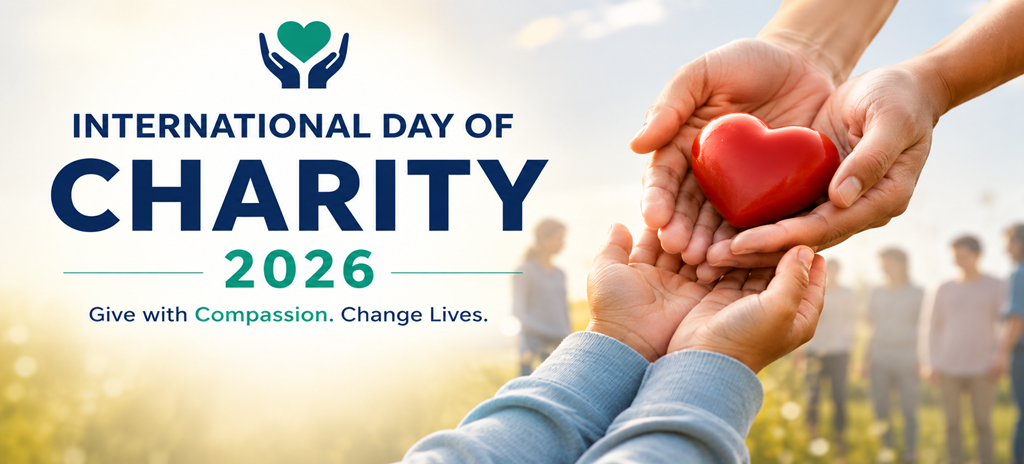
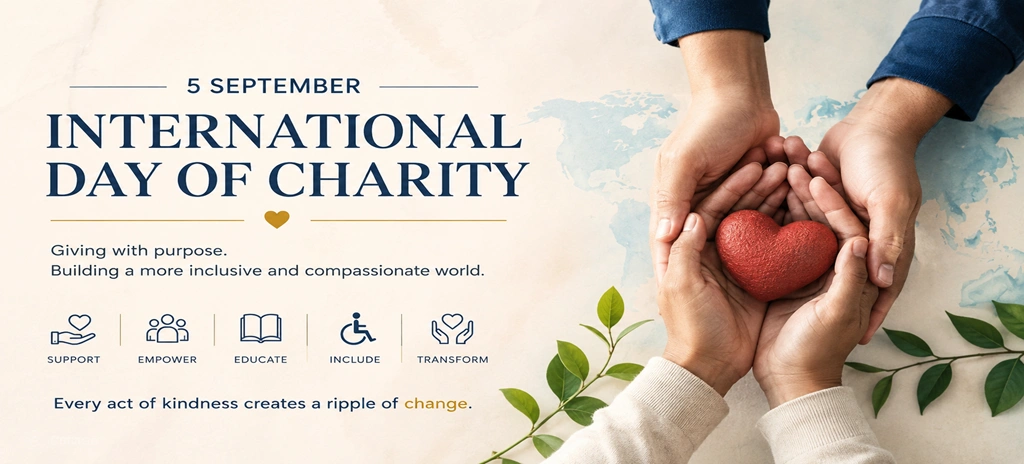
International Day of Charity, observed each year on 5 September, provides an opportunity to consider that question. It is not simply a day for encouraging donations. It is an occasion to reflect on the relationship between individual responsibility and the wider systems that determine who has access to opportunity, education, healthcare and participation in society.
In the UK, where charitable organisations form an established part of civic life, this distinction matters. Philanthropy can provide immediate assistance, but its deeper value lies in whether it contributes to greater independence, dignity and opportunity over the long term.
What Is the International Day of Charity?
International Day of Charity is observed on 5 September in memory of Mother Teresa, whose humanitarian work became internationally recognized for its focus on people living in poverty and on the margins of society.
The United Nations established the observance to encourage charitable activity, philanthropy and volunteering. Its significance, however, extends beyond any individual or organization. It reflects a broader principle: that societies function not only through governments and markets but also through voluntary action and civic responsibility.
Charity therefore occupies an interesting position. It can respond quickly where formal systems may take longer, while also drawing attention to problems that require more fundamental solutions.
From Giving to Responsible Giving
Not every donation produces the same kind of impact.
A thoughtful approach to philanthropy asks several practical questions. Who is being supported? What is the nature of the intervention? Is the assistance temporary, or does it help someone become more independent? How transparent is the organization? And, perhaps most importantly, is there evidence that resources are being used effectively?
This does not diminish the value of generosity. Rather, it makes generosity more purposeful.
For donors in the UK, responsible giving can mean researching a charity before contributing, understanding its objectives, reviewing its governance and considering whether its approach aligns with one’s own values. It can also mean recognizing that time, expertise and professional skills can be as valuable as financial contributions.
Why Inclusion Should Be Part of the Conversation
One area where the distinction between assistance and empowerment becomes particularly clear is disability.
A person living with a physical disability may require an assistive device, rehabilitation, education or vocational training. Providing one of these resources can address an immediate barrier. But the larger objective is often much broader: enabling that person to study, work, travel, participate in community life, and make decisions independently.
This is why disability inclusion should not be viewed solely through the lens of welfare.
It is also a question of access and participation.
An inclusive society is one in which people are not defined by the barriers they face but are given reasonable opportunities to develop their abilities and contribute to their communities. Charitable organisations can play an important role in making those opportunities more accessible, particularly in areas where resources remain limited.
The Role of Charities in a Modern Society
The strongest charities do more than distribute resources. They identify gaps, develop practical interventions, work with communities and attempt to create measurable improvements in people’s lives.
This can include supporting education, providing mobility aids, developing vocational skills, facilitating healthcare or creating opportunities for people who might otherwise remain excluded from mainstream economic and social life.
For organisations such as Narayan Seva Sansthan, this approach is reflected in work supporting people with disabilities through healthcare, rehabilitation, assistive equipment, education and skills development.
The wider lesson is relevant beyond any single organization: effective charity should ideally reduce dependency rather than unintentionally reinforce it.
Charity and the Idea of Dignity
There is another dimension to giving that is sometimes overlooked: dignity.
People experiencing poverty, disability or social exclusion do not necessarily need to be defined by their circumstances. They need access to resources and opportunities that allow them to exercise greater control over their own lives.
This changes the language of charity.
Instead of asking only, “How can we help someone?” it is worth asking, “What would enable this person to participate more fully and independently?”
That shift—from relief towards empowerment—is important to the future of philanthropy.
How Can We Mark the International Day of Charity 2026?
There is no single way to observe the day.
For some, it may mean making a donation. For others, it may involve volunteering, sharing professional expertise, supporting an inclusive initiative or simply learning more about a social issue that receives limited attention.
What matters is that the action is considered.
Before donating, individuals can look at a charity’s objectives, governance, financial information and evidence of impact. They can also consider supporting organisations whose work addresses the underlying barriers faced by the communities they serve.
Even relatively modest contributions can become meaningful when they form part of a sustained culture of civic participation.
A More Thoughtful Culture of Giving
International Day of Charity offers an opportunity to look beyond the traditional idea of charity as an act of benevolence.
Modern philanthropy can be more ambitious than that.
It can be about creating access where there is exclusion, independence where there is dependency, and opportunity where circumstances have limited choice.
Ultimately, meaningful giving is not measured only by how much is contributed. Its significance is better understood by what that contribution makes possible.
On 5 September 2026, International Day of Charity can therefore serve as a quiet reminder that a stronger society is not created by generosity alone, but by generosity accompanied by responsibility, evidence, dignity and a commitment to lasting inclusion.