

Beyond Awareness: A Turning Point for Well-Being
This week (11–17 May) marks Mental Health Awareness Week in the UK. For years, the focus has been on “awareness”—simply acknowledging that mental health matters. However, in 2026, the conversation has reached a turning point. As highlighted by the Mental Health Foundation, awareness is no longer enough; the focus must shift to action.
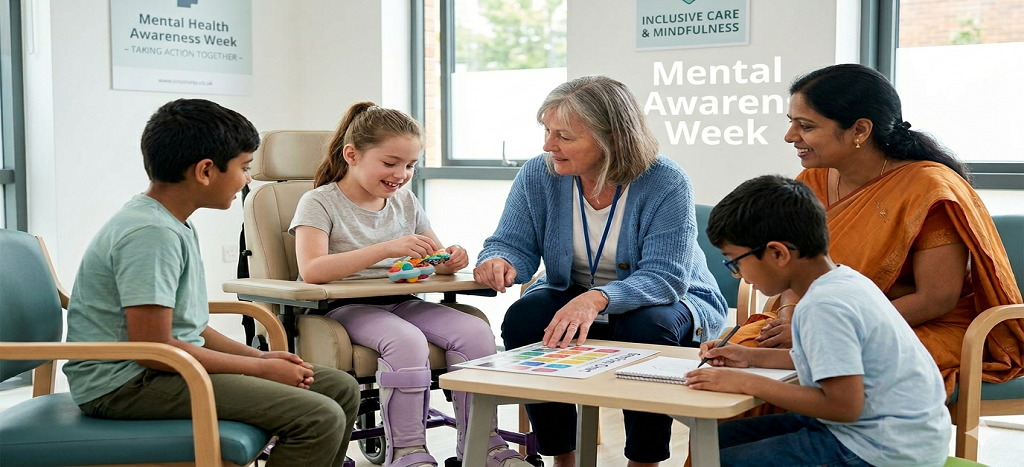
For a society to be truly healthy, we must move beyond words and begin building environments that proactively support the well-being of everyone—especially children with disabilities and their families.
The Power of Environment and Social Action
The power of “action” lies in early intervention. Mental health does not exist in a vacuum; it is shaped by our surroundings: our schools, our workplaces, and our communities. For children who are differently-abled, “taking action” means more than providing medical care; it means addressing the social factors that impact their emotional world.
Research shows that social isolation and lack of accessibility are significant drivers of distress. Action means designing spaces where every child, regardless of physical ability, feels a sense of belonging.
Learning from the Professional Path
Much like the legal profession is now advocating for mental health education during university training, we must equip children with “resilience toolkits” early in life. By teaching emotional regulation and self-worth from a young age, we can prevent temporary challenges from becoming lifelong crises.
The Law Gazette recently noted that nearly 60% of legal professionals report low levels of well-being, often rooted in stresses that began during their education. This serves as a vital lesson for all of us: prevention is better than cure.
Holistic Care for the Differently-Abled
If we apply this to the world of disability and rehabilitation, it becomes clear that we must support the “whole child.” Physical rehabilitation is most effective when paired with a supportive mental health framework. This includes nurturing confidence—helping children see their potential rather than their limitations—and actively working to dismantle the outdated views that treat disability or mental health struggles as signs of weakness.
Supporting the Caretaker and Community
We cannot talk about a child’s mental health without acknowledging the family. Caregivers of children with disabilities often face unique pressures. A mentally healthy society is one that ensures parents and siblings have access to community support, reducing the risk of burnout and ensuring the home remains a sanctuary of stability and joy.
Building a compassionate world requires a collective effort. This week, let’s consider how we can take small but significant actions: advocate for inclusion in local schools, practice empathy toward those facing difficult circumstances, and start open conversations about well-being with the young people in our lives.
Our Commitment to a Healthier Future
At Narayan Seva UK, we believe that every child deserves the chance to flourish—both in body and spirit. This Mental Health Awareness Week, let us move from awareness to action, ensuring no child is left behind in our journey toward a healthier, more inclusive society.
For those looking for further support, the Mental Health Foundation offers practical guides for families, and organizations like LawCare provide dedicated resources for maintaining wellbeing in high-pressure environments.