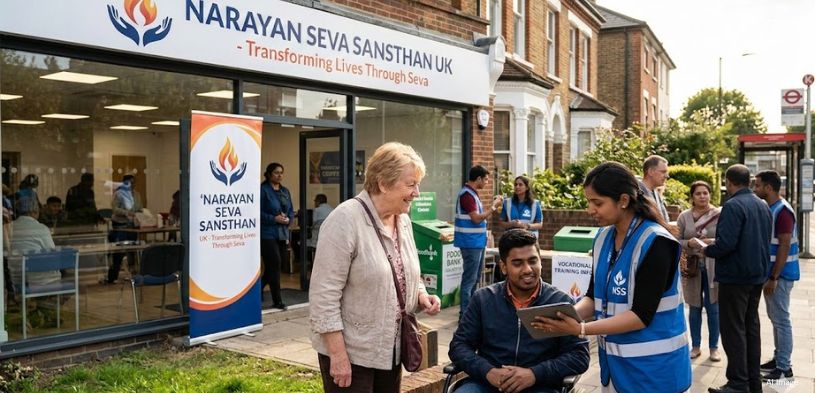


In today’s UK society, where social challenges demand smart, lasting solutions, a non profitable organization in UK plays a vital role that neither the government nor the commercial sector can fully cover. For thoughtful people across Britain who care about evidence, efficiency, and real change, these charities represent a meaningful way to tackle inequality, support vulnerable groups, and drive progress with clear accountability.
Understanding the Reach and Real Value of UK Charities
As of early 2026, more than 170,000 charities are registered in England and Wales alone, with the wider UK voluntary sector including many smaller community groups and social enterprises. Together they bring in well over £100 billion each year and provide jobs for around 900,000–1 million people, while depending on millions of volunteers. Public giving remains substantial—roughly £15.4 billion in individual donations during 2024 — even though the share of people actually donating has dropped to about 50% in recent years.
The numbers show the sector’s huge presence in everyday life: from healthcare and education to the specially abled, poverty relief, and environmental work. What stands out to anyone who looks closely is how these organisations often step in where public budgets fall short or private businesses see little profit, delivering innovative help directly to those who need it most.
Strong Rules That Build Public Confidence
Anyone serious about supporting a non profitable organization in UK starts by checking how it is run. In England and Wales the Charity Commission (with parallel bodies in Scotland and Northern Ireland) sets firm standards. Charities must file clear annual accounts, explain how trustees make decisions, and prove they deliver public benefit. Larger ones face independent audits, and the Gift Aid system lets donors reclaim tax, so more money reaches the cause.
This framework helps separate trustworthy groups from others. People who think carefully usually look for organisations that share detailed impact information, keep running costs low, and show exactly how donations create change rather than paying for heavy administration.
Facing Today’s Pressures—and Showing Strength
Like many parts of society, charities feel the pinch from rising costs, tighter household budgets, and fewer regular donors. Some smaller groups merge to survive, while others seek new income through contracts, legacies, or corporate ties. Despite the strain, the sector adapts: many now track results with better data, use online tools for fundraising, and build smarter partnerships.
For observers who value critical thinking, these shifts raise interesting questions. Which approaches create lasting difference? Which ones truly add value instead of simply replacing what the state should provide?
Spotlight on Narayan Seva UK — Focused, Transparent, and Effective
Among many good causes, some organisations particularly catch the eye because of their clear focus and proven track record. Narayan Seva UK (Charity No. 1149630), the British branch of a movement started in 1985, concentrates on practical rehabilitation for people with physical disabilities and those facing disadvantage.
Alongside medical help, it runs supporting initiatives:
- HEAL—free or low-cost medical care for those who cannot afford it
- Enrich—mass weddings to promote inclusion, nutrition programmes, awareness drives, and education support
- Empower—vocational courses (IT, tailoring, phone repair), talent showcases, and events that celebrate achievement and build confidence
For UK supporters the appeal lies in straightforward efficiency: donations qualify for Gift Aid, and all funds raised here support frontline work with full Charity Commission transparency and no unnecessary local deductions. It offers a way to achieve meaningful global impact while using familiar UK tax benefits.
To see profiles of several leading charities in this space—including more context and comparisons—take a look at our guide to the Top Non-Profitable Organisation (NPO) in UK.
Practical Ways for Thoughtful People to Get Involved
Supporting charities goes beyond a single gift when done with intention. Consider these steps:
- Study published reports, Charity Commission records, and independent reviews before deciding
- Offer specialist skills—whether finance, digital, legal, or planning—to help strengthen governance
- Think long-term with legacy gifts in a will, which can create change for decades
- Raise awareness or push for better policies that help the whole voluntary sector thrive
Backing a group like Narayan Seva UK matches personal values with concrete results: restored mobility, greater independence, and real inclusion that aligns with British commitments to equality and diversity.
Final Thought—Combining Heart and Head
In a time when resources are stretched and needs remain pressing, the non profitable organization in UK gives intellectually engaged citizens a serious channel to turn concern into lasting good. By insisting on the same standards we apply elsewhere—openness, measurable outcomes, scalable ideas—we strengthen the entire field.
Narayan Seva UK welcomes exactly that kind of partnership. A straightforward donation (boosted by Gift Aid), a share of professional know-how, or simply telling others about the work can help bring dignity and opportunity to thousands living with disability.