

Hunger not just means an empty stomach, but also missed opportunities and deteriorating health. There are several individuals with disabilities and poor families in India who can barely afford one healthy meal per day. To them, food donation is not a charity; it is a lifeline that restores dignity, reinforces well-being, and gives a better tomorrow.
Community meal programmes are changing this by making sure that the needy people get fresh and healthy meals almost every day. Thousands of people are getting the comfort of a warm meal through organised food distribution programmes done by volunteers and donors. When individuals decide to donate to India for food, they are not merely feeding a person for a day; they are empowering communities and bringing back compassion.
“A simple meal can spark a lifetime of hope.”
The Vision Behind a Compassionate Food Programme
Serving humanity in dignity and compassion is the vision of every successful humanitarian programme, like that of Narayan Seva Sansthan’s food programme. A proper systematic food donation programme to India is not merely a food delivery programme but a strategy to create a system where no one sleeps hungry.
Here is how such programmes create meaningful impact.
1. Daily Nutritious Meals for the Underprivileged
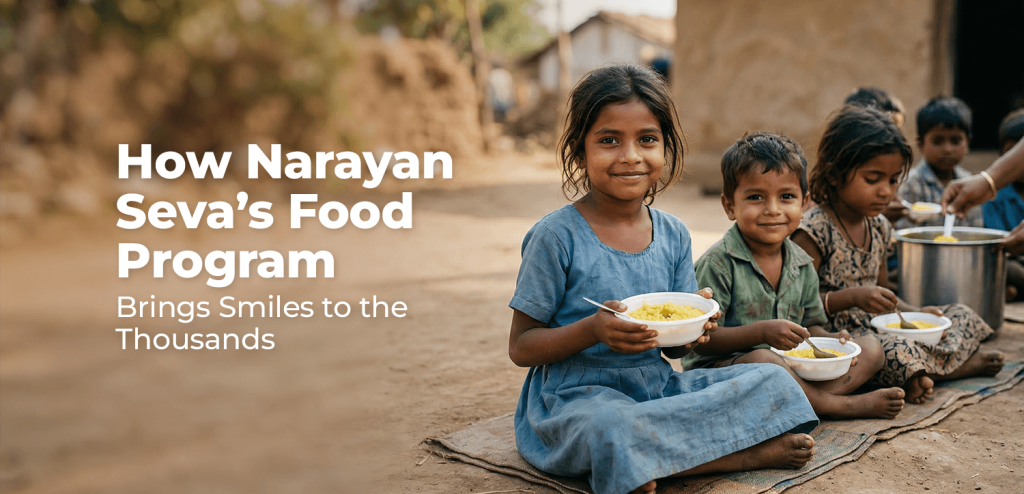
The community kitchens offer large-scale preparation of meals to thousands of people who cannot afford decent food daily. These are hygienically prepared and nutritionally balanced meals which help in enhancing the health of persons with disabilities, the elderly, and the economically weaker families.
Fresh foods, proper preparation, and distribution guarantee that beneficiaries get healthy meals that help them in maintaining their overall health.
“One meal today, a healthier tomorrow.”
2. Supporting Patients and Their Families
Many individuals travel long distances to receive medical attention or corrective surgeries for disabilities. Daily meal arrangements are another major expense for these families.
Food programmes generally provide meals to the patients and their caregivers at no cost during the treatment periods. This will ensure that families can focus on the recovery and care rather than on their next meal.
3. Community Dining That Promotes Dignity
Food distribution projects commonly use a community-dining approach where individuals are brought to a good and courteous place of eating together.
Rather than giving out food like charity, these programmes provide a platform where people feel valued. Communal meals create a feeling of belonging and community among beneficiaries.
4. Marking Celebrations with Food Sponsorship
Most of the donors celebrate birthdays, anniversaries or other special occasions to sponsor hundreds or even thousands of meals.
With such programmes, personal celebrations turn into charitable activities. Rather than the common gifts, donors make an everlasting impact by offering meals to those who require them most.
“Celebrate life by feeding lives.”
5. Food Distribution by Volunteers.
The volunteers are very important in terms of the delivery of the meals to the people who need them the most. Cooking, organising distribution, and food delivery need volunteers who provide each meal with a personal touch and human contact.
Their participation transforms food distribution into a charitable movement as opposed to a mere logistical operation.
Together, donors as well as volunteers make large-scale food donations to India possible.
How Food Donations Transform Lives Beyond Hunger
Although the main objective of a food programme is to provide meals, the benefits are much more than just feeding hungry communities. Such efforts bring positive consequences that enhance life and empower societies.
1. Improved Health and Nutrition
Inaccessibility to healthy food is an issue that concerns most of the underprivileged individuals. The beneficiaries receive balanced nutrition in terms of regular meals, which is made possible by donation programmes.
This is to prevent malnutrition, boost immunity, and overall body health, particularly among the disabled who need consistent nourishment.
2. Emotional Comfort and Human Connection
A decent meal served in a nice manner can offer emotional relief to people when they are in challenging times.
When individuals are being served food, it gives them a new sense of hope and belonging. They understand that at least somebody cares about their well-being.
3. Economic Support for Struggling Families
Food is very expensive and may be beyond the means of poor families.
With meal programmes providing regular food subsidies, families can redirect their low income into other higher priorities such as education, health, or shelter.
Even such little help can make a family much more stable.
4. Empowering Donors to Make Real Impact
The food donation programme provides people with a direct and clear method to make a contribution to social change.
When people choose to donate food in India, they are guaranteed that the donations are directly transferred to food prepared and served to those who need them most.
5. Building a Culture of Compassion
Food programmes encourage social communities to engage in acts of charity.
People can help to eliminate hunger by taking part in a community project by volunteering, funding the meals, or creating awareness.
These efforts eventually led to the establishment of a culture of compassion as a social responsibility.
“Kindness served daily.”
Why Food Donation Matters More Than Ever
Hunger relief is one of the primary concerns of the world. Even in developed countries like the UK, around 14 million people are facing food insecurity. Poverty, disability, or inaccessibility of resources may also increase the complexity of access to day-to-day meals among people in the economically disadvantaged parts of India. Food donation programmes help reduce this difference by making sure that the needy individuals have access to normal food.
When a man donates to a food charity organisation in India, he is helping to sustain massive kitchens that feed thousands of individuals. These meals are provided to people with disabilities, patients in hospitals, their relatives, and the needy or those with no means of living who rely on such facilities.
A little donation helps to serve hundreds of meals.
Conclusion
Feeding a needy person is one of the greatest acts of kindness. One meal can rebuild self-respect, alleviate suffering, and instilinstill hope and smiles to those who need it most.
Narayan Seva Sansthan is a non-governmental organisation that offers nutritious food to thousands of poor families via its mass feeding programmes. These attempts demonstrate that even simple acts of kindness might have a strong effect.
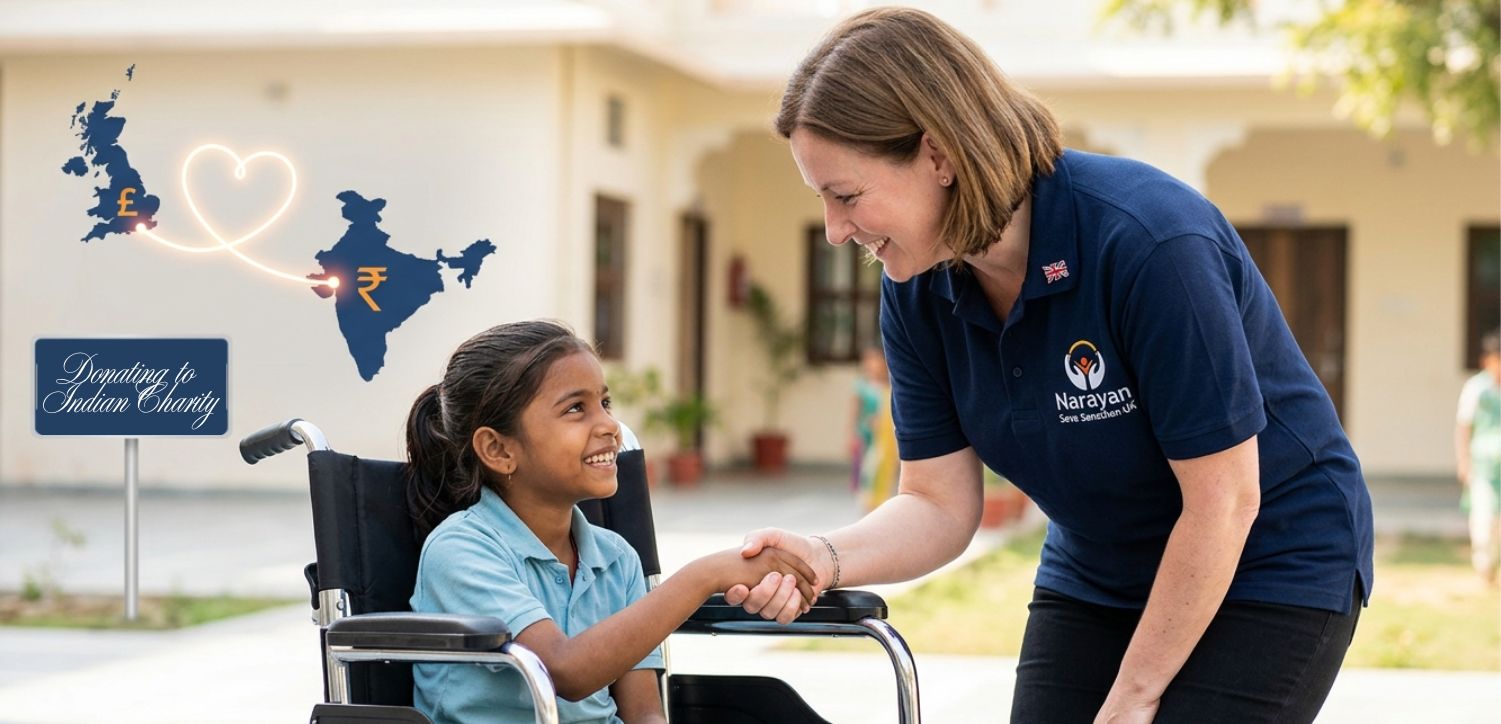
A good way of supporting this change is through food donation programmes. When you choose to make a donation to India through Narayan Seva Sansthan UK in the form of food aid, you help to keep sensitive people and families out of hunger.
Because sometimes, the greatest gift we can give is a meal.
FAQs
- What is the role that food donation plays in India?
The food donation programmes provide healthy food to the unprivileged and people with disabilities.
- Will the UK support food programmes in India by giving donations?
Yes, foreign donors can simply donate online to sponsor organized food donations to India.
- Who is the beneficiary of such food donation programmes?
Some of the beneficiaries include people with disabilities, treatment patients, caregivers, and the economically disadvantaged communities.
- What can I do to volunteer in a food donor programme?
You can help by sponsoring food, giving money or building awareness regarding programmes that can help in the provision of food to the needy.