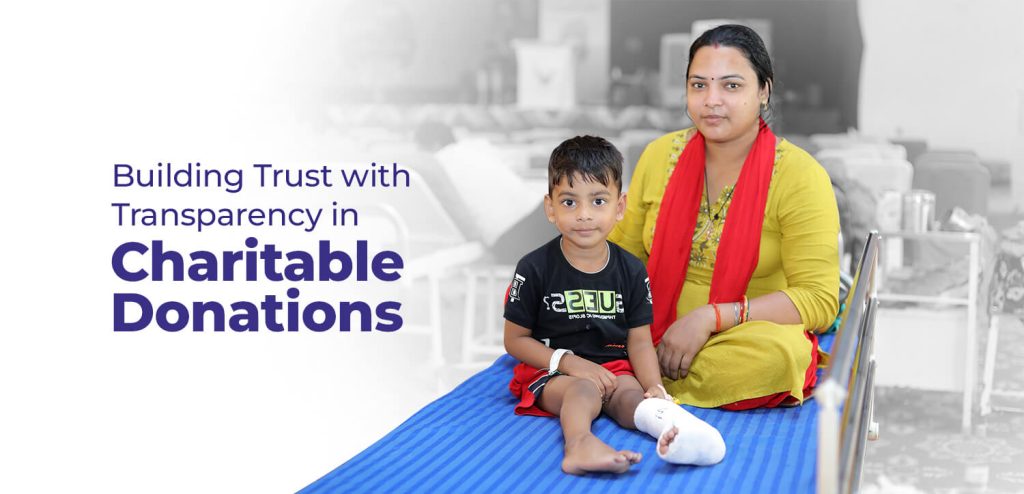


What makes an act of giving a meaningful donation? Well, to most, the answer is trust. In an age where there are hundreds of people requiring support, donors are increasingly demanding something other than a heartfelt plea; they demand transparency. They would like to find out what happens to their charitable donations, who they benefit, and what the real effect of their contribution is.
Credibility is now a new currency of transparency in the nonprofit sector. Donors want to see visible outcomes, whether it is financing corrective surgeries, supporting the education of children, facilitating exposure to skills, or feeding the underserved communities. Charities that adopt transparency not only enhance the confidence levels of the donors but also enhance the effectiveness of any initiative that they embark on.
Transparency is the action that is trusted in. Transparency is redefining the way individuals select organisations to make their Charity Donations. Let’s explore how.
Why Transparency Matters More Than Ever
The modern generation of donors is informed and curious. They do not merely donate, but also evaluate. They compare. They research. They ask questions.
As a matter of fact, as per the 2025 UK Giving Report, the British people gave an estimated 15.4 billion to Charity in 2024, yet the number of individuals donating has fallen. This means that even though individuals are still generous, they are increasingly requiring more accountability on how their Charity Donations are utilised.
They make a decision based on three major expectations:
1. Clarity on How Funds Are Used
A credible charity will tell you what happens to your donations, whether it is healthcare treatment and prosthetic support or an educational or rehab centre.
Donors would be happy to get detailed reports, expenditure breakdowns, and project summaries because they get the assurance that their money is being spent well.
2. Visible and Measurable Impact
A before-and-after transformation, an impact story, statistics on a surgery, stories of success of someone who has recovered, or a report that has been made by a vocational training centre- these are very strong indicators of reality.
With real results, the donors develop confidence.
3. Accessibility and Openness
A transparent organisation, like Narayan Seva Sansthan, is one that has information readily available to them; annual reports, financial statements, project briefs, and current activities.
It could be organising community health camps or giving the differently-abled mobility aids, but openness shows a firm dedication to accountability.
Transparency: The Bridge That Connects Donors and Charities
Transparency does not just have a reporting aspect; it is a strong sign of respect, integrity, and sincerity in human interaction. The trustworthiness that charities develop when they opt to be open goes beyond appreciating the donors and enhancing long-term relationships.
#1 Openness That Builds Donor Trust
On its part, transparency demonstrates to the donors that their assistance is appreciated. When organisations openly discuss challenges, be the delays due to shortages of medical supplies, the sudden increase in the number of beneficiaries, or even problems in the logistics on the ground, they are communicating integrity and not excellence.
This openness will provide the donors with some confidence that their money is being spent for a good cause.
#2 Regular Updates That Strengthen Partnership
Consistent reporting and regular updates are also important. They indicate that operations are planned, underway, and moving constantly forward. These communications, combined with emotional appreciation of donor support, develop an impression of a partnership.
Donors feel recognised, valued, and engaged in the mission that they are helping through charity donations.
#3 Turning Data Into Human Stories
However, transparency is not just a way of honouring, it is also a way of building donor confidence. Good communication transforms the figures into narrations. The emotional bond is established when the donors can see real lives being transformed, children who can now go to school, those who can walk with prosthetic limbs, and those whose families can now get the food that they need.
Giving is personal, meaningful, and very rewarding.
#4 Accountability That Inspires Long-Term Giving
Long-term commitment is then driven by accountability. With consistent updates, newsletters, and visuals of the progress, the donors are willing to be further encouraged to contribute to the cause.
They understand that the organisation appreciates responsible resource management and will be keen on delivering impact.
#5 Ethical Transparency That Creates Advocates
Ethical practises are illustrious in the world where misinformation may effortlessly distort the minds of people. Open reporting, visibility of governance, as well as open sharing of outreach activity, generate genuine social evidence.
The supporters transform into advocates who share the message proudly due to the perceived integrity of the mission.
“Transparency conveys a single strong fact.”
Your contributions are valued, and each donation is viewed with dignity. It builds trust, develops loyalty, and changes charitable donations into something permanent.
How Clear Reporting + Heartfelt Stories Build Trust
In making decisions to whom to give, the donors will not only want to see a good cause, but also see clarity, honesty, and connection. The most reputable charities are the ones that use facts and real human experience together so that they can demonstrate what they do and why it matters.
A good example of this is Narayan Seva Sansthan, which is a registered charity providing life-changing initiatives to differently-abled as well as underprivileged individuals.
Transparency Tools that Foster Confidence
Trusted organisations like Narayan Seva Sansthan UK use a number of instruments that can make donors understand how their contribution can be translated into action:
Financial Transparency: The charity complies with the regulations of the UK Charity Commission and usually incorporates features such as Gift Aid in order to make the value of the donations higher, in order to demonstrate to the donors that giving to it is not only legal but also economical.
Impact Tracking & Updates: Donors are given transparent reports on the use of the funds, free corrective surgeries, artificial limbs, and mobility aids that reach beneficiaries in India without deductions.
Community & Volunteer Voices: Personalisation can be achieved through stories and testimonials of volunteers, supporters, and beneficiaries to increase trust and connection.
The Art of Emotional Narration
Statistics are essential, but narratives make them significant. That is where transparency becomes trust with heart when a donor looks at the picture of a child walking after undergoing corrective surgery, or they hear a grateful note by a person whose life was changed. Consider:
Actual Change in Lives: The UK donors receive pictures, videos, and thank-you messages from people who received mobility aids and see where their money is spent.
Stories of Hope: Personal stories not only capture the results, but includes bravery, strength, and thankfulness; they make donors feel emotionally connected to the individuals they assist.
This combination transforms transparency into trust and trust into generosity that will stay for life.
Conclusion
Trust is everything in the world of charitable giving. The donors would like to know that their contribution, be it through corrective surgeries, rehabilitation programmes, education programmes, mobility aids distributions, or even the provision of food to communities, is actually going to the needy ones.
Through openness, charities build confidence, improve relationships, and create bonds that can be long-lasting. Transparency in reporting, integrity in narration, and visible outcomes make donors give with all their hearts.
At Narayan Seva Sansthan UK, we show a clear demonstration of how openness, accountability, and compassion can be used to bring positive change.
“Give wisely. Give transparently. Give where your heart feels the impression.”
FAQs
1. Why is transparency essential in Charitable Donations?
Transparency implies that the donors know how their funds are used, and this gives them trust and also confidence in the organisation.
2. What can I do to ensure that a charity spends my donation in a responsible manner?
Check their annual reports, along with financial statements, and impact updates on the official website of the organisation.
3. What are the indicators of a reputable charity?
Good credibility can be measured by clear communication, measurable results, audited finances, and regularly updated information.
4. Do transparent charities have more impact?
Yes. Responsibility helps to promote better planning, effective utilisation of resources, and long-term commitment of the donor.