

And just imagine that one day you wake up and get to know that you will not be able to walk, run or even stand, which is the most basic necessity of life. This is a painful fact because millions of people across the world lose limbs due to accidents, diseases or due to congenital disabilities. But through technological advances in the form of Artificial Limbs and through the generosity of charities worldwide, hope is being restored every day.
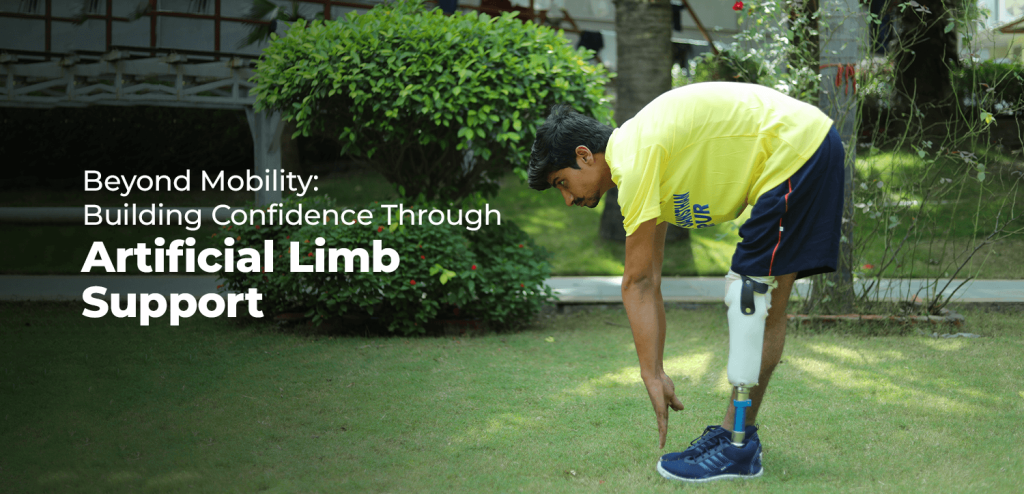
Artificial limbs are not ordinary medical equipment, but are devices to restore lives and confidence. Artificial Limb Support programmes are life-changing to those who are underprivileged and not in a position to afford treatment to replace an absent limb.
Charitable organisations around the globe are assisting people to move on and restore their mobility by offering them Artificial Limb Donation, and have turned despair into determination.
“A step restored is a rebirth of life.”
How Artificial Limb Support Restores Lives
Artificial limb initiatives do not just offer medical equipment but also prove to be of great help to people to feel independent and confident again. For most disadvantaged amputees, the provision of a prosthetic limb is the catalyst that enables them to move on with life.
There are key areas of rehabilitation and empowerment that artificial limb support initiatives need to address.
1. Free Access to Artificial Limbs
A lot of the underprivileged people are unable to afford the cost of prosthetic treatment.
Charitable programmes like that offered by Narayan Seva Sansthan UK fill this gap by giving Artificial Limbs to those who need them at no cost, so that no one is denied the chance to walk again because of financial restrictions.
2. Custom-designed Prosthetic Limbs
Each person has distinct mobility needs. Prosthetic experts take time to design and make the limbs comfortable, stable, and mobile to enable the beneficiaries to walk and carry out their daily tasks with confidence.
3. Mobility Training and Rehabilitation
Acquiring a prosthetic limb is only the start. Beneficiaries are rehabilitated and undergo physiotherapy so that they will know how to use their artificial limbs and gradually achieve balance and strength.
4. Access Medical and Distribution Camps
Special camps are arranged to access individuals in remote or rural locations. The camps assist in identifying the beneficiaries, measurements, and provision of prosthetic limbs to the beneficiaries who would otherwise not have access to specialised medical facilities.
5. Ongoing Support and After-Sales Supervision
Follow-ups and adjustments are necessary to provide proper care to the prosthetics. Artificial limb programmes usually offer lifelong medical advice so that beneficiaries can be comfortable and mobile in the long-run.
“Mobility gives back motion, but confidence gives back life.”
The Transformational Impact of Artificial Limb Donation
Behind all the prosthetic limbs that are given out there is the generosity of the donors who think that a hopeful difference can be made. Artificial Limb Donation is also essential in assisting charitable programmes in offering mobility solutions to individuals who cannot afford them.
These gifts fund various life-transforming services that enable amputees to resume their lives.
1. Prosthetic Manufacturing Investment
The funds donated assist in meeting the expenses of producing prosthetic limbs with modern materials and technology, so that beneficiaries will get reliable and strong mobility aids.
2. Sponsoring Medical Specialists and Prosthetic Experts
Artificial limbs need to be designed and fitted by highly trained prosthetic engineers and medical professionals. The donations assist in sponsoring these trained professionals who aim to restore movement to patients.
3. Provision of Rehabilitation Services
Adaptation to a prosthetic limb requires time and instructions. Donations make the rehabilitation programmes possible that help people to regain balance and confidence in their daily lives.
4. Expansion of Outreach Programmes
Artificial limb support projects run camps and outreach to people in underserved areas. The donations enable the provision of these services to those communities that cannot afford prosthetic services.
5. Building a Better Future
When mobility comes back, the person will be able to resume employment, continue schooling, and engage in the society. Artificial limb support assists them in transitioning between dependency and independence.
Artificial Limb Support: Building Confidence and Providing a Second Chance at Life
Prosthetic limbs not only assist in restoring physical movement but also confidence and the completely to dream once again. In most cases, the amputees can lose a limb, which will lead to isolation, self-esteem issues, and even a potential loss.
But when they are provided with an artificial limb support in the form of a prosthetic limb, their attitude towards life is totally changed.
In the United Kingdom, the demand for prosthetic care is still growing. The 2024 report suggests that in the UK alone the number of major lower-limb amputations was 3,688 in 2023, and it highlights the increasing need in the field of rehabilitation and prosthetics.
- Artificial limbs enable children to attend school more conveniently, and they can now play sports and interact with their peers without fear and doubt.
- Adults begin to work, earn the money, and perform their everyday activities independently.
Such independence gives individuals the ability to rebuild their identity and make their place in the society.
Moreover, prosthetic support programmes in most cases also include medical support and skill training, along with vocational training. The strategy helps beneficiaries to become economically independent and helps them start sustainable livelihoods.
Most importantly, these efforts help unprivileged people know that disability is not what determines their potential.
Conclusion
Artificial limbs are not mere medical equipment, but a ray of hope. Artificial Limb Support presents an opportunity to restore mobility and confidence for people who previously had to face enormous obstacles. Artificial Limb Donation does not just have an effect on one person. It changes families, empowers communities, and creates a culture of caring and belonging.
Each artificial limb delivered can be seen as a step toward a better and more equal world in which physical disabilities would not restrict the potential of a person.
Humanitarian organisations like Narayan Seva Sansthan UK ensure that this transformation is possible through their assistance in prosthetic limb programmes, along with rehabilitation programmes, and by conducting outreach camps to the differently-abled.
Through these efforts, donors contribute to restoring more than mobility to the needy and helping to restore confidence, dignity, and a bright future.
FAQs
- What is Artificial Limb Support?
Artificial Limb Support is defined as the support to people who have lost their limbs or are undergoing medical treatment and rehabilitation services because of an accident, disease, or birth disability.
- What is the consequence of Artificial Limb Donation?
Artificial Limb Donation aids in designing and transferring the prosthetic limbs to the needy people in such a manner that they can walk on their own.
- Do the artificial limbs have to be custom-made?
Yes, the artificial limbs are highly structured and made to fit the body build and movement needs of the patient to make it comfortable and practical.
- Why are artificial limb programmes important?
By providing prosthetic parts as well as rehabilitation support, they help poor amputees walk once again, provide them with confidence and live quality lives.